
Quick Summary
Small transducers can be installed closer to the measurement point and require less environmental plumbing when surrounded by high- density piece of equipment. The benefit of a “squeezer” is also weighed against the range of the pressure, temperature profile, electrical fit and access for install. Smaller case does not necessarily mean more accuracy.
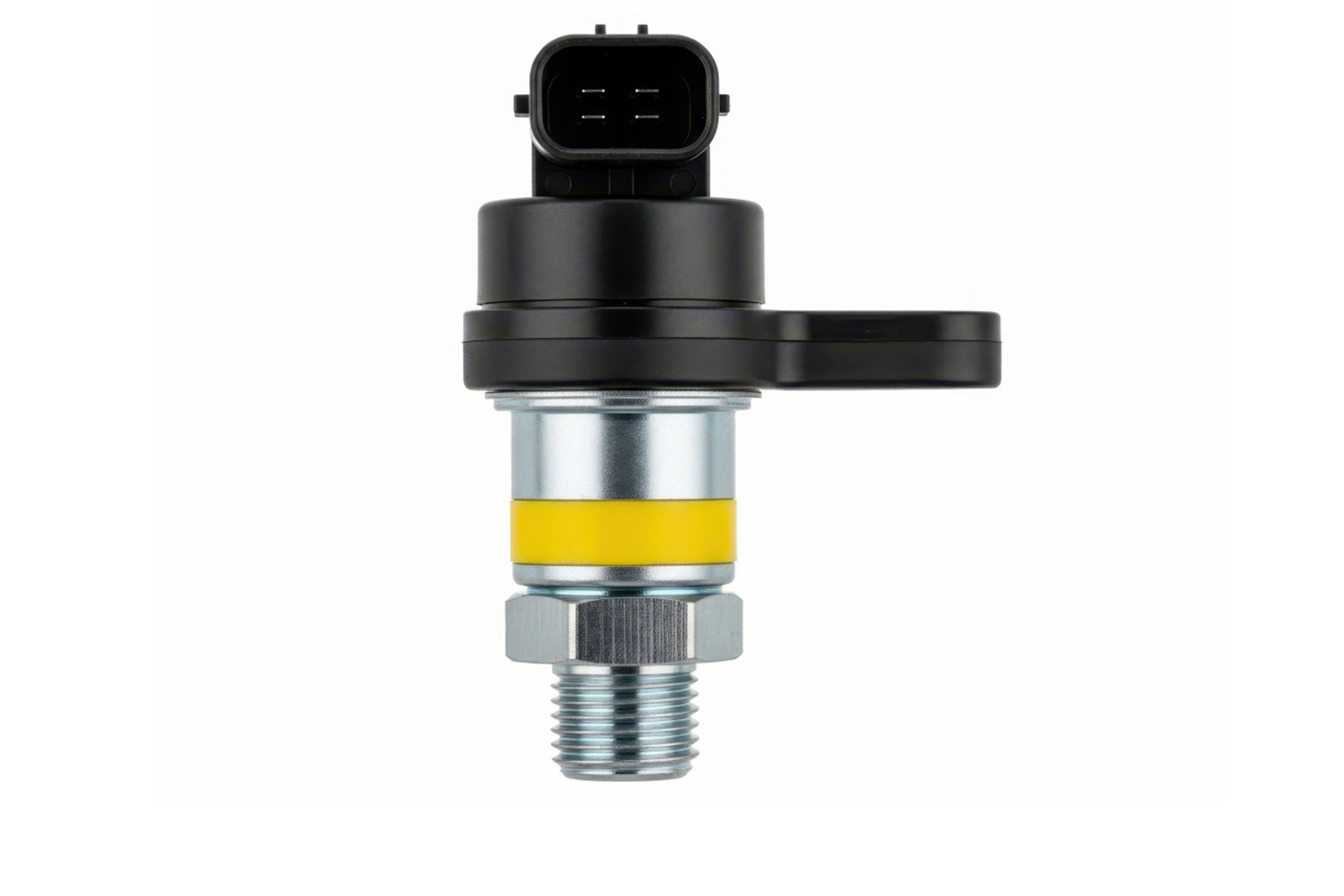
Crowded equipment often forces engineers to mount a pressure sensor wherever space remains. A small pressure transducer can change that arrangement, bringing the measurement closer to the point that actually matters. The upgrade comes from better placement and a suitable specification, rather than size alone.
Where a Small Pressure Transducer Makes Room
A compact housing can fit beside a valve block, inside a test fixture, or near a hydraulic actuator. These locations may require adapters and tubing. Shorter, simpler connections can make equipment easier to assemble and inspect.
At Stellar Technology, our GT160 industrial pressure transducer combines a one-inch outside diameter with millivolt-per-volt output and welded stainless steel construction. It is designed for demanding test and measurement environments.
Before choosing a smaller sensor, sketch its installed envelope. Include the connector, cable bend, pressure fitting, and wrench clearance. A compact body still needs space for installation and removal without disturbing neighboring components.
Measure Closer to the Pressure Event
Imagine testing a valve that opens and closes quickly. A sensor mounted several feet away may receive the pressure change through tubing that alters its timing or shape. Moving the sensing point nearer the valve can reduce those installation effects.
The benefit depends on the fluid, tubing dimensions, and event speed. A long connection may work adequately for a slowly changing static pressure. A fast transient needs closer attention to the response of the entire pressure path.
Small size creates placement options; it does not establish bandwidth. Compare the sensor response with the acquisition rate and the fastest event you need to capture. Otherwise, a tidy installation can still miss the measurement that motivated the upgrade.
Choose Accuracy Around Your Working Range
Engineers sometimes replace a bulky sensor with a compact model that has a much wider range. That can weaken the measurement if the accuracy specification uses full-scale output. Calculate the resulting uncertainty at the pressures your machine normally reaches.
For example, ±0.1% of a hypothetical 1,000-psi span equals ±1 psi. At a 100-psi reading, that equals one percent of the reading. The arithmetic matters more than an impressive percentage printed without context.
Include expected surges when selecting range and overload capability. Avoid stretching a low-range sensor beyond its limits to obtain finer readings. A useful upgrade balances measurement tolerance with the loading the equipment will actually impose.
Account for Heat and Mechanical Loads
Mounting closer to the process may expose the transducer to higher temperatures. A small sensor beside a hot manifold faces different conditions from one on a cool panel. Check both operating limits and the temperature range over which accuracy is compensated.
Mechanical installation matters just as much. Tighten the designated fitting surfaces rather than twisting the housing or cable. Route wiring so normal machine movement does not pull against the electrical termination.
A lighter package can reduce loading on a small fitting, but vibration still needs evaluation. Check the actual mounting arrangement and expected vibration environment. Do not assume that a sensor survives every installation because its housing looks sturdy.
Make the Electrical Upgrade Count
Bridge-output transducers need suitable excitation and signal conditioning. Reusing an existing amplifier without checking sensitivity can create incorrect scaling. Verify the sensor output, amplifier input, and controller range as one chain.
Plan cable routing before installation. Nearby motor wiring and switching equipment can introduce interference into low-level signals. Use the specified grounding and shielding arrangement, then inspect the recorded signal under normal machine operation.
Keep filtering proportional to the task. Heavy averaging can make a display look calmer while concealing a short pressure spike. If the upgrade aims to capture rapid events, compare raw and filtered data during commissioning.
Check the Upgrade Under Real Conditions
Take baseline readings before replacing the existing sensor. Repeat the same operating cycle afterward, with comparable temperature and loading. Look for better repeatability, improved transient capture, and fewer installation problems rather than judging only the displayed number.
Our repair and calibration services can help investigate an older transducer before you decide to replace it. Sometimes calibration resolves the measurement issue without changing the mechanical layout.
Keep the original and replacement specifications with the commissioning record. Document connector pin assignments, scaling, pressure reference, and any controller changes. This record makes later troubleshooting more straightforward when a technician encounters an unexpected reading.
Make Compact Size Solve a Real Problem
A smaller transducer earns its place when it improves access, placement, or the quality of recorded pressure data. Define the problem before changing hardware. Then verify that the compact package meets the measurement, environmental, and maintenance requirements together.
Fit Better Pressure Measurement Into Your Equipment
We manufacture compact GT160 pressure transducers at Stellar Technology for demanding measurement applications. Get in touch with your space constraints, pressure range, and output requirements, and our team will recommend a compact fit.
FAQs
Is a smaller pressure transducer always faster?
No. Sensor design, connection geometry, fluid behavior, and acquisition settings determine the installed response.
Can I keep my existing amplifier?
Possibly. Confirm excitation, sensor sensitivity, input compatibility, and scaling before connecting the replacement.
What dimensions should I check before ordering?
Check the complete assembly, including fittings, connector length, cable bend space, and access for tools.