

Quick Summary
A power generation sensor converts pressure, temperature, force, torque or position into a signal that plant controls can read. Boilers, turbines, valves and generators each call for a different type of measurement. Range, operating environment and accuracy decide the final choice, and custom engineering could close any gap a standard model leaves.
A plant manager reading an outage report tends to ask one question: could we have seen this coming? A well-placed power generation sensor is frequently how the answer gets built, because it turns pressure, heat, movement and force into signals that a control room can read.
Steam, water, fuel and spinning steel all carry conditions worth measuring, and each condition calls for a different kind of device. Together, those readings form a picture of how healthy the equipment is and how hard it is working.
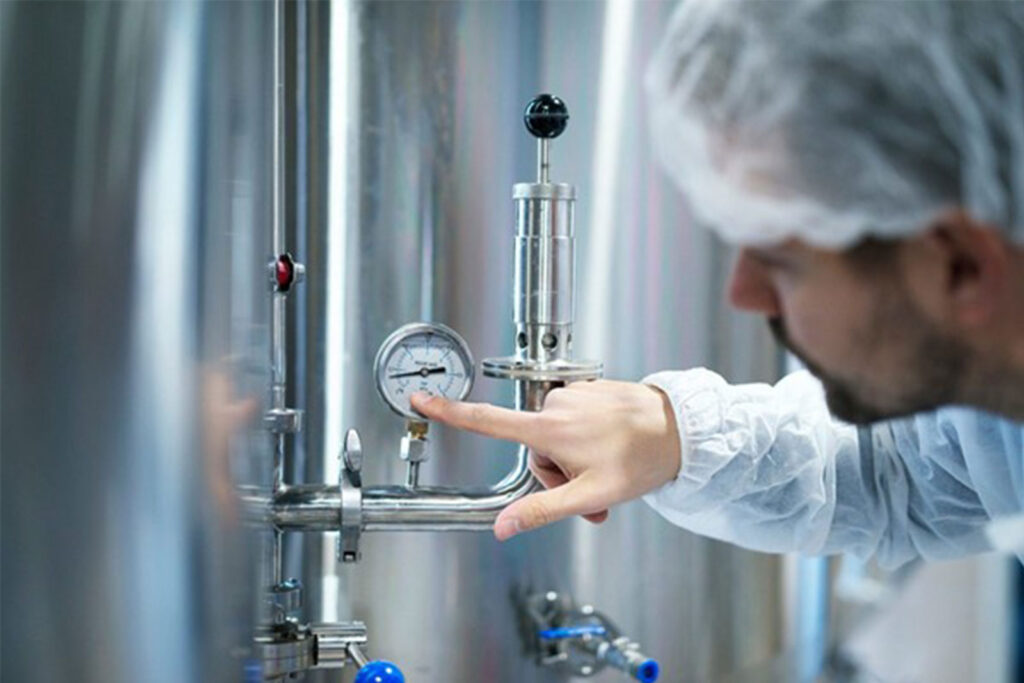
What a Power Generation Sensor Does
A sensor detects a physical condition, and the electronics around it turn that condition into a signal. In industrial work the device is often called a transducer or a transmitter. A transducer produces a raw electrical output, such as a small voltage, while a transmitter conditions that output into a standard signal, such as a 4-20 mA current loop, that travels well over long cable runs.
The signal goes to a control system, an alarm panel or a data recorder. Operators watch the live values, and engineers study the recorded history to spot slow trends that a quick walk-through would miss.
Three jobs sit behind nearly every installation: protecting people and equipment from unsafe conditions, keeping output efficient, and scheduling maintenance by condition instead of by the calendar. Each job could lower the odds of an unplanned shutdown, which is expensive for any generating station.
Pressure Sensors for Steam, Fluid and Fuel Systems
Pressure is among the most widely measured conditions in a power plant. Steam leaves a boiler at high pressure, feedwater is pumped back in against that pressure, and lubrication, hydraulic and fuel systems all depend on holding a set range. A drop or a surge in any of these lines could signal a failing pump, a blocked filter or a leaking valve.
Differential pressure adds a second view. By comparing the pressure before and after a filter, strainer or flow element, a differential sensor shows how restricted that component has become, so crews can service it when the reading calls for it rather than guessing.
Buyers comparing pressure sensors for these systems usually begin with three details: the pressure range, the fluid that touches the sensing element and the temperature at the port.
The fluid deserves particular attention. Steam, water, oil and gas can each attack different materials, and a diaphragm that suits clean oil may not suit hot condensate. Matching the wetted materials to the fluid is an important early check.
Temperature Sensors for Turbines, Boilers and Bearings
Heat is both the product and the hazard in power generation. Exhaust gas, steam lines and boiler walls run hot by design, while bearings and generator windings should stay inside limits that their makers specify. A bearing that runs warmer than its history suggests could point to lubrication trouble or misalignment, and an early alert may allow a repair before damage spreads.
Temperature readings also support efficiency work. Comparing inlet and outlet temperatures across a heat exchanger, for example, can show whether it still transfers heat as designed or has started to build up deposits.
Specifiers evaluating temperature sensors for these positions typically weigh the measuring range, the response time and the way the probe mounts, whether in a thermowell or a threaded fitting.
Response time is easy to overlook. A probe sheathed in a thick thermowell reacts more slowly than a bare one, which is acceptable for a bearing that changes over minutes and less suitable for a fast process change.
Load, Force and Torque Measurement on Rotating and Structural Equipment
Mechanical loads are harder to see than pressure or heat, yet they shape how long equipment lasts. Torque transducers measure the twisting force carried by a shaft or coupling, which can help engineers confirm what a driveline actually delivers during commissioning or a test run.
Load cells and force sensors measure the push, pull or weight acting on a structure. Possible placements include supports under a vessel, tension in a cable or rod, clamping force in a bolted joint and loads on a test stand used to qualify components before installation. Readings from these positions could reveal shifting loads, settling foundations or uneven preload.
Environment drives the design here as well. Vibration, moisture, temperature swings and electrical noise near large generators can all disturb a weak signal, so cable shielding and sealed construction matter as much as the measuring range.
Displacement and LVDT Sensors for Valve and Actuator Position
A linear variable differential transformer, or LVDT, measures how far something has moved along a straight line. Inside, a movable core slides through a set of coils without touching them, so there is no sliding electrical contact to wear out. That construction is one reason LVDTs are often selected for long service life in demanding positions.
In a power plant, position feedback tells the control system whether a steam valve, a fuel valve or a hydroelectric gate has reached the position it was commanded to hold. Displacement sensors can also follow slow movement, such as the growth of a turbine casing as it heats, giving engineers a way to check that expansion follows the expected pattern.
Because position feeds straight into control decisions, repeatability and stability across temperature are worth asking about. A sensor that drifts could make a healthy valve look as though it is sticking.
Choosing a Power Generation Sensor for Your Application
The same questions come up on almost every specification, and answering them early could save redesign work later.
- Measurement range: cover the normal operating span with headroom for surges, without picking a range so wide that resolution suffers.
- Accuracy and stability: decide how much error the control or monitoring decision can tolerate, and ask how the output drifts with temperature and time.
- Environment: note the fluid, temperature, vibration, moisture and electrical noise at the mounting point.
- Output and mounting: match the signal type to the control system and the thread or flange to the equipment.
- Approvals: hazardous-area and marine approvals are granted per product series, so confirm that the exact series being quoted carries the approval the site requires.
- Calibration and support: ask about traceable calibration, repair turnaround and technical support after purchase.
When a catalog model misses one of these points, a modified-standard or fully engineered design could close the gap. Buyers with unusual ranges, tight envelopes or mixed environments may want to explore custom sensors early, while the equipment design is still flexible.
Custom Engineering and Calibration Support
Stellar Technology designs, manufactures and services pressure, load/force/torque, displacement and temperature sensors at its facility in Amherst, New York, with engineering, machining and calibration under one roof. That arrangement lets engineers and machinists work on a custom application together, from the first drawing through finished hardware.
The company’s quality systems are certified to ISO 9001:2015 and AS9100D. Those certifications describe the quality management system. They do not, by themselves, approve any individual product for a particular hazardous area, so product-level approvals should always be checked against the series in question.
In-house calibration systems extend to 600,000 lbf, which supports force and load measurement across a wide span, and repair, calibration and field support services are available after installation. Early contact with an applications engineer could shorten the path from requirement to a sensor that fits.
FAQs
What types of sensors are used in power generation?
Power plants rely mainly on four families: pressure, temperature, load/force/torque and displacement sensors. Pressure and temperature devices watch steam, fluids and heat, while load, torque and displacement devices watch mechanical movement and strain. The mix depends on the plant design, whether gas turbine, steam or hydroelectric, so a sensor list built for one site rarely transfers unchanged to another.
Why is temperature monitoring important in a power plant?
Temperature monitoring matters because heat is usually among the earliest signs that equipment is wearing or working harder than designed. A bearing that creeps warmer over several weeks, or a generator winding approaching its limit, can often be corrected before it forces a shutdown. Trend logs make the value clearer, since a gradual rise is easier to spot on a chart than in a single reading.
When should a power plant consider a custom sensor?
A custom sensor deserves consideration when a standard model cannot match the pressure range, size, mounting style or operating environment of the equipment. Retrofits are a common example, because the available space and connection points are already fixed. Sharing the drawing, the medium and the required output with an engineering team at the start could give a clearer answer on whether a modified-standard design would work.
Request a quote for your plant’s monitoring needs from Stellar Technology, the Application-Solution Source: A US Manufacturer of Pressure, Load/Force/Torque, Displacement, and Temperature Sensors.